We often underestimate the impact lighting has on a home’s ambiance and mood. A lamp isn’t just a light source; it’s a core element that shapes the style of a space and determines the quality of light. Among the many components of a lamp, the shade is undoubtedly the most crucial. It’s not only a focal point but also a crucial filter that tames harsh light into a soft, inviting atmosphere.
In the pursuit of exquisite home furnishings, the most common dilemma is the competition between two mainstream materials: the tough metal lampshade and the transparent glass lampshade . They represent completely different design philosophies and approaches to light processing. One emphasizes structure and directionality, while the other focuses on diffusion and purity.
metal and glass lampshades from five dimensions: design aesthetics, functionality, light quality, durability, and maintenance costs . This will help you find the “light armor” that best suits you and improve your home taste in one fell swoop.
Design aesthetics and style tension: minimalist coolness and transparent elegance
the lampshade directly determine the visual tone of the space.
Metal lampshades: a symbol of structuralism and industrial strength
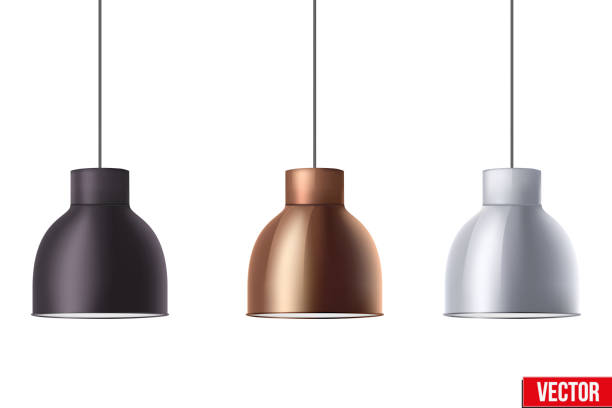
metal lampshades (such as iron, brass, and aluminum) lies in their sense of structure and strength . They often appear in geometric shapes such as hemispheres, cones, or complex wireframes.
Style Matching: Metal lampshades are a great way to create industrial, minimalist , and modern looks . Black brushed metal lends a cool, professional feel, perfect for a kitchen island, study, or workspace. Polished brass or rose gold, on the other hand, can add a touch of effortless luxury or a touch of Mid-Century Modern vintage charm.
Visual focus: Due to the opacity of metal, the shape of the metal lampshade will become a striking and substantial geometric body in the space, especially suitable for areas that need to be “framed”.
Glass lampshade: pure, transparent and fluid art of light
glass lampshades lies in their transparency and the fluidity of light . Whether it is clear, opalescent, frosted or embossed glass, it allows light to become part of the design.
Style Matching: Glass lampshades are a prime choice for Scandinavian, Wabi-Sabi, and classic elegance . Clear or smoked glass pendant lamps maximize the sense of openness and are suitable for living or dining rooms. Opalescent frosted glass lampshades perfectly simulate the soft diffusion of natural light, creating a calming and warm atmosphere.
Visual characteristics: The lightness of the glass material avoids visual oppression. Even a large glass lampshade will not appear bulky, but will create a dreamy effect of “floating” in the air.
The Science of Light Quality: Directed Focus vs. Uniform Diffusion
The physical properties of the material determine how the lampshade handles light. This is the most important consideration when choosing a functional lampshade.
Metal lampshade: efficient and directional, light has “purpose”
Metal lampshades are the champions of directional lighting . Their opaque surface reflects and focuses all light onto a specific area (usually the direction of the opening).
Advantages: High light utilization and precise focusing . Ideal for local tasks requiring high illumination, such as reading lights, kitchen countertops, or art displays.
Disadvantages: The light distribution is uneven, which easily produces obvious shadows and contrast in non-lit areas . It is not suitable as the main lighting to create a soft overall atmosphere.
Glass lampshade: soft diffusion, achieving “panoramic light”
Glass lampshades (especially frosted, opalescent, or textured glass ) are masters at soft light diffusion . Through scattering, they evenly distribute point light sources over a large area.
Advantages: It achieves excellent anti-glare effect and even light distribution, which greatly improves visual comfort and is very suitable for rest and relaxation spaces such as bedrooms and living rooms.
Disadvantages: Lower light efficiency . Because light is scattered and absorbed multiple times, the perceived brightness of a bulb of the same power is usually lower than that of a metal lampshade , and may not be suitable for high-intensity task lighting.
Durability, maintenance costs and safety considerations
In addition to aesthetics and functionality, maintenance and safety factors in real life are equally important.
Durability and cleaning challenges of metal lampshades
The metal lampshade is made of a sturdy material that is extremely durable and impact-resistant (high IK rating). It is resistant to chipping and can withstand minor impacts, making it ideal for homes with pets or children.
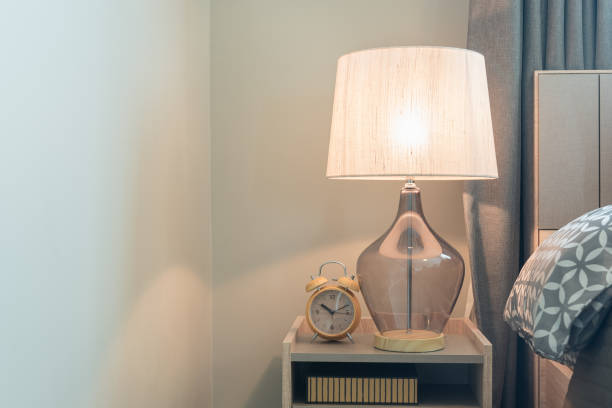
Maintenance Challenges: The biggest challenge is dust accumulation . Due to static electricity and the open structure, dust easily accumulates inside the metal lampshade . Cleaning should be done with a dry cloth or vacuum cleaner to avoid water marks, especially on polished metal. Furthermore, in humid environments (such as coastal areas), non-stainless steel metals may rust or oxidize .
Cleaning advantages and safety concerns of glass lampshades
Glass lampshades are excellent for cleaning because their surface is smooth and oil and dust are easy to wipe off. They can be restored to a new look with just a neutral detergent and a damp cloth. They are especially suitable for easily dirty environments such as kitchens.
Safety and Challenges: The biggest safety concern is fragility . Although modern glass is reinforced, it still carries a risk of breakage, requiring higher installation and maintenance requirements. Glass also requires higher heat dissipation from the bulb. It’s crucial to ensure the bulb’s wattage doesn’t exceed the upper heat limit of the glass shade to prevent thermal shock and accelerated bulb aging.
| Feature Comparison | Metal lampshade | Glass lampshade | Applicable space recommendations |
| Aesthetic style | Industrial style, minimalist, mid-century modern, strong sense of structure | Nordic style, classic elegance, wabi-sabi style, light and transparent | Work area, kitchen, corridor |
| Light processing | Directional spotlight, reflection, obvious shadows, concentrated light | Soft diffusion, scattering, anti-glare, uniform light | Bedroom, living room, dining room |
| Durability | Extremely high, impact resistant, not easy to break (high IK) | Fragile, but tempered glass offers increased durability | High impact risk areas |
| Maintenance difficulty | Easy to accumulate dust, difficult to wash (afraid of rust) | Easy to clean, washable, but needs to be shatterproof | Dirty environments (kitchens, bathrooms) |
| heat dissipation | Excellent, open structure and fast heat dissipation | Relatively poor, closed structure easily accumulates heat | High-wattage bulbs (need to cool) |
Make the final choice: Which “Master of Light” is right for you?
Whether you choose a metal or glass lampshade ultimately depends on how you prioritize functionality and ambiance for your space:
If functionality and efficiency are your top priorities, choose a metal shade . It provides efficient, powerful, directional light, perfect for intense reading, cooking, or working. It’s also durable and built to stand the test of time.
If you prioritize emotional value and visual comfort, choose a glass lampshade . The even, soft, diffused light it provides instantly creates a warm and relaxing atmosphere. In living rooms and bedrooms, it allows you to say goodbye to harsh glare and immerse yourself in the pure art of light and shadow.
in conclusion:
With the increasing diversity of lighting designs, lampshades are no longer just a shade, but an irreplaceable tool for interior design expression. Whether it’s the sharp edges of a metal lampshade or the smooth, jade-like texture of a glass lampshade , they silently define every moment of light and shadow in your life.
Now, it’s time to review your space needs: Do you need efficient and precise “workstation” lighting, or gentle and peaceful “resting haven” light?
When was the last time you really paid attention to your lampshades? Let us know in the comments: which material’s light aesthetic is your favorite?