In the teeming online home furnishings market, lampshades are one of those rare items that look beautiful but never quite click. In pictures, they might boast the perfect hue and luxurious texture; but once they arrive, you might be faced with scratchy fabric, a color that doesn’t match the wall, or even a connector that won’t fit.
Buying lampshades online may seem convenient, but it’s actually fraught with pitfalls. We’ve identified the five most common online lampshade buying traps and provided professional strategies for avoiding them. With these tips, you can choose high-quality, perfectly fitting lampshades with the precision of a professional designer.
Trap 1: The Color Trap
This is the most common and frustrating problem when buying lampshades online. An off-white can turn a pale yellow, while a navy blue can turn nearly black.
Avoiding pitfalls: “double proofreading” of light and color
Cross-reference: Don’t just look at the product page. Search for user-submitted photos and unboxing videos of the same product. User photos taken under different lighting conditions can better reflect the true color than high-definition renderings from the store.
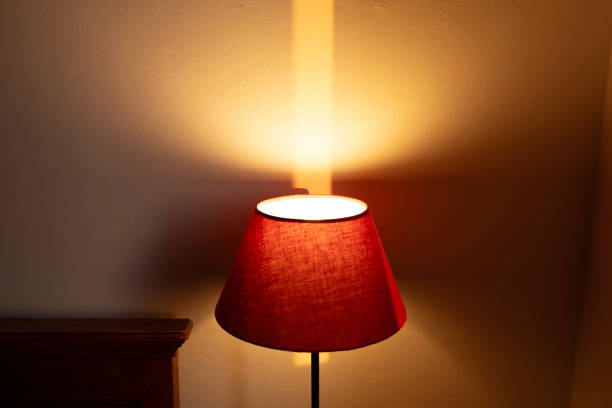
Understand color temperature: Keep in mind that the color of a lampshade will be affected by the color temperature of the bulb . If you plan to use warm light ( 2700K ), the shade will appear more yellow; if you use cool light ( 4000K and above), the shade will appear more white or blue. Consider the shade color along with your desired effect on the bulbs in your home before purchasing .
Trap 2: The Fitter Fiasco
As we all know, lampshade interfaces are not universal. Many people only measure the diameter and height of the lampshade, but ignore the crucial interface type .
Pitfall Avoidance Strategy: Measure Like an Engineer
Identify the interface type: Before placing an order, you must confirm 100% which of the following interfaces your lamp uses and check whether the new lampshade provides the corresponding accessories:
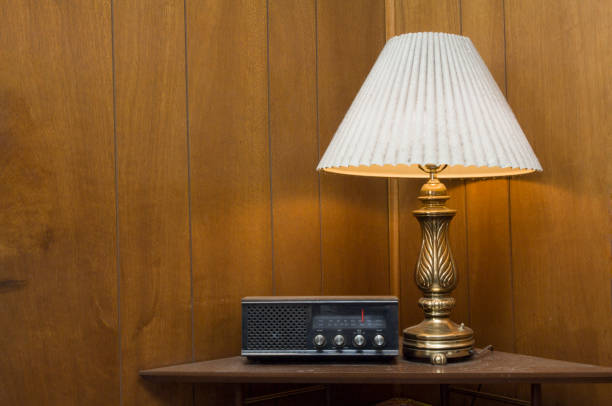
Harp Fitter: Check if it comes with a top cap (Finial) .
Uno Fitter: Check the inner diameter of the lampshade ring .
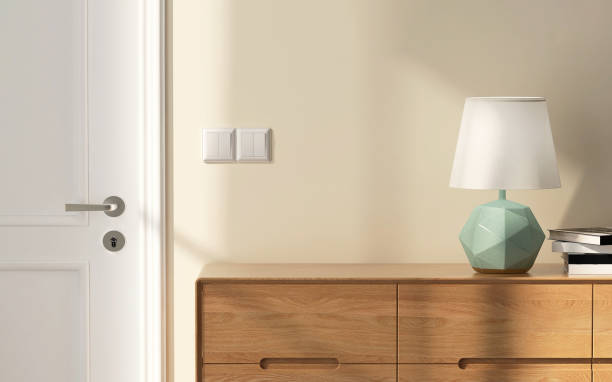
Verify the “$2/$3$ rule”: The lampshade should be $1$ to $2$ times wider than the lamp base , and the lampshade should be about $2/$3$ the height of the lamp base. If the new lampshade doesn’t meet this golden ratio, even if it fits, it will look odd.
Trap 3: The Material Smell
Cheap online lampshades, especially those lined with parchment or plastic, often emit an unpleasant chemical odor when heated , which not only affects indoor air quality but can also be a safety hazard.
Pitfall avoidance strategy: Focus on material details and user reviews
Look for lining information: High-quality lampshades are usually lined with PVC or heat-resistant polyester . If the product description is vague about the lining material (just saying “plastic”), be wary.
Smell keyword search: Search for keywords like “Smell,” “Fumes,” or “Chemical” in user reviews. If you see a lot of users mentioning an unpleasant smell, avoid it immediately.
Prefer natural materials: If your budget allows, choose lampshades made of natural cotton, linen , or metal , which generally do not release harmful odors when heated.
Trap 4: The Wobble Factor
Low-quality lampshade frames (such as thin metal wires) are easily deformed during transportation and may become wobbly, tilted, or deformed once mounted on the lamp, which directly destroys the beauty of the lamp.
Pitfall avoidance strategy: focus on framework and weight description
Frame Material: Look for descriptions that emphasize “reinforced metal frame” or “thick steel wire.” Low-quality lampshades often have very thin, flimsy frames that bend easily.
Pay attention to the packaging method: Check the seller’s description of packaging and shipping. A responsible seller will provide the lampshade with a custom, padded cardboard box instead of a simple plastic bag.
Trap 5: The Return Catch
Because lampshades are large, many online retailers charge high return fees or have complicated return processes. If you buy a lampshade that’s a different color or size, the cost of returning it might be more than you gain.
Pitfall avoidance strategy: “risk assessment” before shopping
Read the return details: Before placing an order, make sure you know who will pay for the return shipping and whether the merchant will charge a restocking fee.
Credibility assessment: Prioritize purchasing on mainstream e-commerce platforms (such as Amazon or Target) or the official websites of well-known home furnishing brands. These platforms usually have more comprehensive and consumer-friendly return protection systems.
Summarize
Buying lampshades online is a hunt that requires patience and strategy. The key to avoiding low-quality materials and color traps is to trust user reviews, not the seller’s promotional images.
Next time you place an order, take out your tape measure and checklist to accurately verify the dimensions and connections, and read the return policy carefully. Your investment in a lampshade is worth 10 minutes of careful research.
What’s the most frustrating problem you’ve encountered when buying lampshades online? How did you solve it? Share your experiences in the comments!